
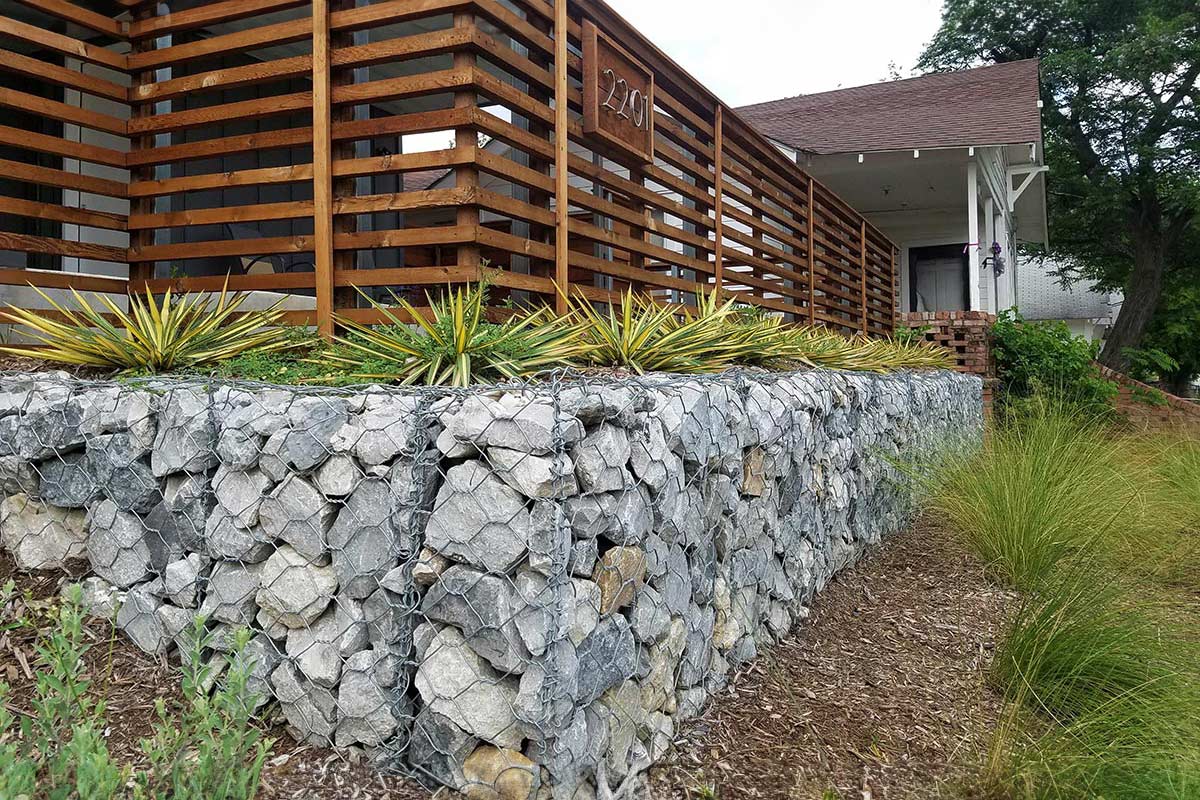
If you reside in the Phoenix Valley, you already know that the ground doesn’t always cooperate. Your landscaping might suffer from sloped lots, hard desert soil, abrupt monsoon rains, and very hot weather. So, if you want to build a retaining wall or stop erosion, you need something that can take Arizona’s weather without needing repairs all the time.
The gabion wall is one option that more and more people are looking at. You may have seen them: metal wire baskets loaded with stones that are placed on top of each other to make a powerful wall. They appear natural and bold, and they work well. But are they a good fit for your property? Let’s put it in simple terms.
The Benefits of Gabion Walls
One of the best things about a gabion wall is that it lasts a long time. Gabions are different from regular concrete walls because they can bend. In the Phoenix Valley, where the soil changes and the weather changes a lot between seasons, that flexibility is important. Gabion walls can shift a little without breaking, even when they are under a lot of stress.
Another big feature is the drainage. A gabion wall doesn’t hold water. Rainwater runs through the building naturally because it is made of stone. That built-in drainage helps keep pressure from building up during the rainy season, which minimizes the likelihood of structural problems over time.
Gabion walls can also save you money. For the most part, they don’t need as much shaping, finishing, or heavy construction as poured concrete walls do. Getting stone from nearby places can help keep the overall cost of the project down.
People who like a natural desert look frequently like how gabion walls fit in with the rest of the area. The stone texture fits perfectly with Arizona’s natural surroundings, and over time, plants can grow around or even inside the building, making it look softer.
Lastly, they may be used in many ways. Gabion systems may be used to build walls that hold things up, screens that keep others from seeing in, beautiful elements in the environment, and to stop erosion. Their modular architecture makes them work with many different types of homes.
The Downsides to Consider
Not every house is a good fit for gabion walls.
They make a statement with their looks. Some homeowners like the rough, architectural look. Some people choose smooth stucco or ornate block walls that go with the style of typical Southwestern homes. Gabions are not subtle, thus style does important.
Another thing to think about is how long the material will last. The wire baskets are usually galvanized or coated to preserve them, but Arizona’s hot heat and occasional rain can still wear them down over time. Choosing the correct materials and hiring competent specialists may help keep your investment safe.
It is also important to be precise when installing. It is important to grade, level, and prepare the foundation correctly. If a gabion wall is not put up correctly, it may settle unevenly or seem crooked. This isn’t something you can do over the weekend, especially if it involves building support.
Lastly, the type of stone you choose might affect the cost of materials and shipping. Planning ahead is vital so that your budget doesn’t have any shocks.
Let’s Build Together!
The Eagle Environmental team is here to help if you’re thinking about a retaining wall or an erosion control solution. We will look at your property, go over your alternatives in detail, and come up with a solution that works for your house and your budget.
Call Eagle Environmental now to set up your consultation and create a landscape that will survive in the Arizona desert.
