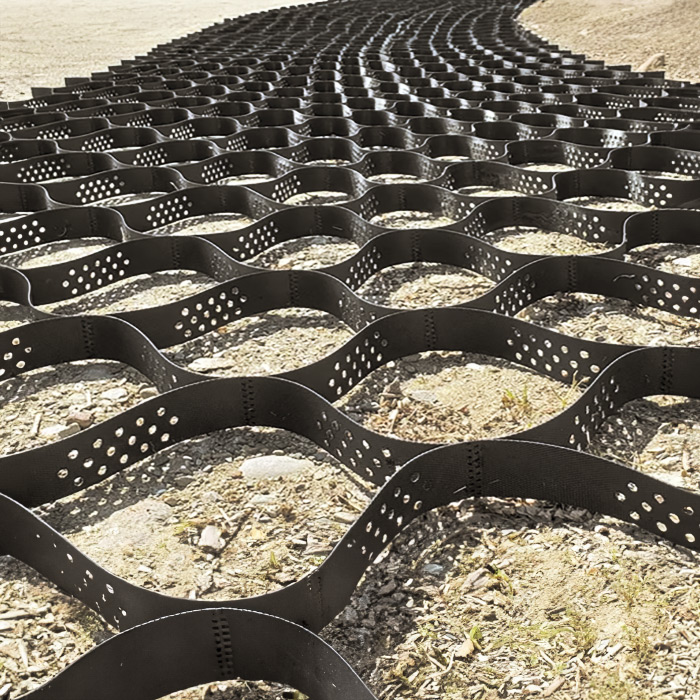
If you have ever seen soil wash away on a slope, around a channel, or near a landscaped area after a storm, you already understand why erosion control matters. In Arizona, that problem can show up fast. Even in a dry climate, a strong rain event can move a surprising amount of soil in a short time. That is where an erosion control cellular confinement system comes in.
A cellular confinement system, often called a geocell system, is a three dimensional structure made from strips of material that expand into a honeycomb pattern on site. Once the cells are opened and secured in place, they are filled with soil, gravel, or other infill materials. That creates a more stable surface that helps hold material where it belongs instead of letting it shift, wash out, or break down over time.
How a Cellular Confinement System Works
The basic idea is simple. The walls of the cells confine the fill material inside them. Instead of loose soil sitting exposed on a slope or channel, the infill is held in place within the cell structure. That confinement reduces movement caused by rainfall, flowing water, wind, and traffic.
Because the material is locked into thousands of small connected spaces, the system spreads forces more evenly and helps the surface resist erosion. In many applications, vegetation can also grow within the cells, which gives the site an even more natural look while still improving long term stability.
Where These Systems Are Commonly Used
Cellular confinement systems are used in a wide range of erosion control and stabilization projects. You’ll find them on slopes, in channels, along embankments, and drainage paths. They’re also used on shorelines and in places where soil needs extra support.
They are also used where runoff has the potential to carve ruts into bare ground or where traditional surface treatments may not hold up well.
Flexibility is a major advantage for property owners, contractors, and engineers alike. These systems offer the ability to incorporate various infill materials, allowing for customization based on the specific objectives of each project.
Some applications are designed to support vegetation, while others are meant to provide a more durable surface with stone or aggregate.
Why They Make Sense in Arizona
In the Phoenix area and other parts of Arizona, erosion control is often about preparing for extremes. Extended dry spells can leave the soil vulnerable, unprotected. A single, intense storm, arriving unexpectedly, can then wreak havoc.
Sloped areas, drainage channels, and disturbed construction sites are especially vulnerable.
A cellular confinement system helps by reinforcing the surface before those problems begin. It can reduce soil loss, improve slope performance, and help protect nearby improvements such as landscaping, hardscapes, and drainage features. It provides a more deliberate strategy than just dumping rocks or relying solely on plants to get the job done.
Why This Method is a Go-To Choice
These systems have gained traction because they offer a potent blend of durability and adaptability. They’re a solid option when aesthetics are a consideration, when enduring performance is paramount, or when the location presents tricky drainage challenges. Furthermore, they’re a good fit for projects needing erosion control without resorting to cumbersome or overly intrusive measures.
In plain terms, a cellular confinement system helps turn unstable ground into a more controlled, durable surface. That can make a big difference on both small and large outdoor projects.
The Cellular Solution!
If you are dealing with slope erosion, runoff concerns, or soil stability issues, contact Eagle Environmental to learn more about cellular confinement systems and other erosion control solutions for Arizona projects.
References
https://www.eagleenv.com/erosion-control-products.htm
https://www.prestogeo.com/installation/soil-stabilization/geoweb-slope-protection-system/
https://www.mdpi.com/2071-1050/15/15/11773
https://greenfix.co.uk/images/Spec-pdfs/The_History_of_Geocells_-_New.pdf