Woven Vs Nonwoven Geotextile Fabric: Which One Does Your Arizona Project Need?
Choosing the right geotextile is not simply a matter of selecting the heaviest roll available. Woven and nonwoven fabrics perform differently, and the wrong choice can affect drainage, soil separation, base stability, and the life of the finished project.
Arizona contractors also need materials that can handle difficult soils, intense heat, and sudden monsoon runoff. Understanding the basic difference between woven and nonwoven geotextile fabric is a useful first step when reviewing project requirements.
What Is Woven Geotextile Fabric?
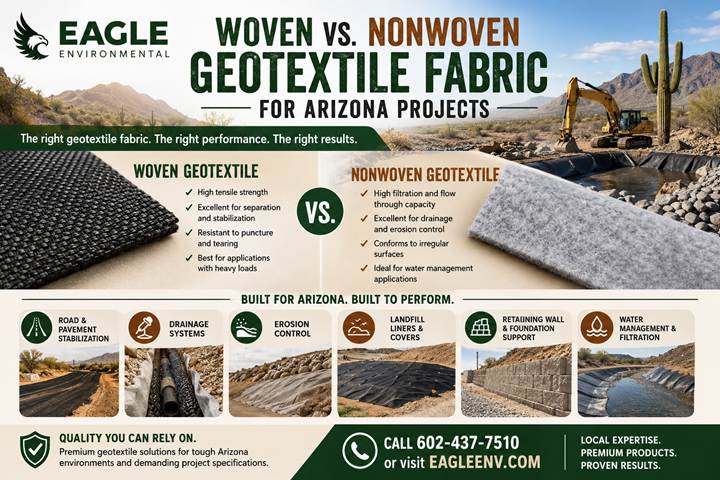
Woven geotextile fabric is produced by weaving strong synthetic strips or yarns into a structured sheet. Its primary advantage is tensile strength. It helps spread loads and limits movement between weak subgrade soil and the aggregate placed above it.
This makes woven fabric a common choice beneath gravel roads, construction entrances, parking areas, and other surfaces that carry vehicles or equipment. It can help keep aggregate from pressing into soft soil while reducing rutting and the amount of replacement stone needed.
Woven fabric still allows some water movement, but drainage is not usually its main purpose. When a project depends on rapid filtration or water flow through the fabric, a nonwoven product may be more suitable.
When Is Nonwoven Geotextile The Better Choice?
Nonwoven geotextile has a felt like appearance because its fibers are bonded rather than woven into a regular pattern. It is designed to allow water to pass while holding back soil particles.
That combination makes nonwoven fabric useful around French drains, behind retaining walls, beneath riprap, and in trench drainage systems. It can also provide a protective cushion beneath pond liners and other geomembranes.
The weight and strength of nonwoven products vary considerably. A lighter fabric may be selected for filtration, while a heavier product may provide added protection or separation. The correct specification should reflect the soil, expected water flow, aggregate size, and loads involved.
Drainage Or Stabilization: Start With The Main Goal
A simple way to begin the selection process is to ask what the fabric must accomplish.
For base stabilization beneath a road, parking area, or construction entrance, woven fabric often provides the strength needed to separate aggregate from unstable soil. For drainage and filtration, nonwoven fabric is usually the more practical starting point because water can move through it more easily.
Some projects require more than one function. A roadway may need separation and reinforcement, while a drainage feature beside it needs filtration. Using the same fabric everywhere may appear convenient, but it can create poor performance in one part of the site.
Arizona Conditions Make Product Selection Important
Arizona soil conditions can change greatly from one location to another. Sandy soils, expansive clay, caliche, loose fill, and rocky ground each create different challenges. Monsoon storms can then place sudden pressure on drainage channels, slopes, and exposed construction areas.
A fabric that is too weak may tear during placement or fail to keep aggregate separated. A product with unsuitable permeability may slow drainage or allow fine soil to migrate into stone.
Installation also matters. Wrinkles, damaged sections, inadequate overlap, and exposed fabric can reduce the effectiveness of a correctly specified material.
Project plans, engineering requirements, and applicable agency specifications should guide the final decision. Contractors should also confirm roll dimensions, strength ratings, permeability, puncture resistance, and certification requirements before ordering.
Work With An Experienced Arizona Geotextile Supplier
The best geotextile is the one matched to the actual application, not merely the product that happens to be available. Eagle Environmental Products supplies woven, nonwoven, monofilament, drainage, separation, stabilization, and erosion control fabrics for projects throughout Arizona. For help reviewing your project requirements, product specifications, and statewide delivery options, call Eagle Environmental Products at 480-833-2816 today.
References
Eagle Environmental Products: Geotextiles And Base Stabilization
Carthage Mills: What Is A Geotextile?
US Fabrics: Arizona Geotextiles And DOT Specifications
Arizona Department Of Environmental Quality: Construction Activity General Permit